


Navigating the regulatory landscape of New York requires a disciplined and informed approach to administrative management. Whether you are launching a new enterprise in a bustling metropolitan hub or managing an established company across the state,maintainingstrict adherence to state and federal statutes is essential for yourlongtermoperational success. This guide provides a comprehensive roadmap for business owners who must reconcile complex administrative burdens with the goal of achieving sustainable growth.
The Foundation of Regulatory Compliance
The regulatory environment in New York is managed primarily through the Department of State, which oversees entity formation, professional licensing, and corporate governance standards. Businesses thatfail toalign their operations with these requirements often face administrative dissolution, significant penalties, or the suspension of their legal standing.
For entrepreneurs preparing to enter the market, the first step involves ensuring theinitialstructure is legally sound. Many foundersutilizea professional business formation platform to ensure their Articles of Organization meet the specific criteria of the state. Establishing a robust legal foundation is not merely a formality but a criticalcomponentof risk mitigation. When you assess the regional business climate for your new venture, consider how your choice of location affects your regulatory burden. New York City may have municipal ordinances that layer upon state requirements, andmonitoringthese local nuances is part of a proactive strategy. If you are preparing to start a business in New York, the entity type you selectdeterminesyour ongoing tax liabilities and reporting obligations.
Entity Formation and Initial Filing
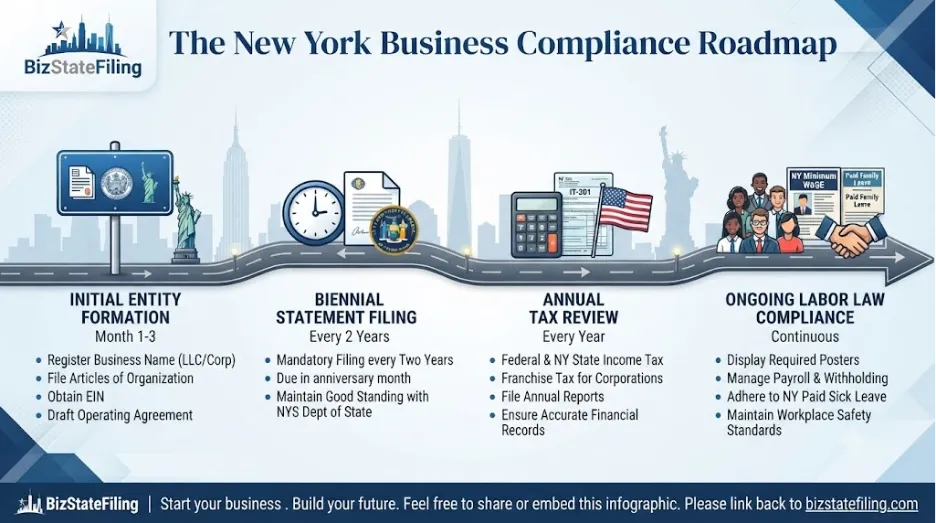
The process of forming a business entity in New York involves several steps. You must selectan appropriate structure, such as an LLC or a Corporation, and file the necessary paperwork. This is a foundational step where many errors occur, which can lead to complications later in the business life cycle. It is wise to perform thorough market research to understand where your business will thrive, as local regulations in counties outside of the city can differ significantly.
When filing your entity, accuracy is paramount. Every detail, from the registeredagent'saddress to the business purpose, must be clearly documented. Once the paperwork is processed, you mustmaintaincopies of your formation documents in an accessible format to ensure you can provide them during audits or when seeking financing. For those evaluating potential acquisitions, remember that a clean compliance history is a major factor when you buy a business .
Biennial Reporting and Ongoing Maintenance
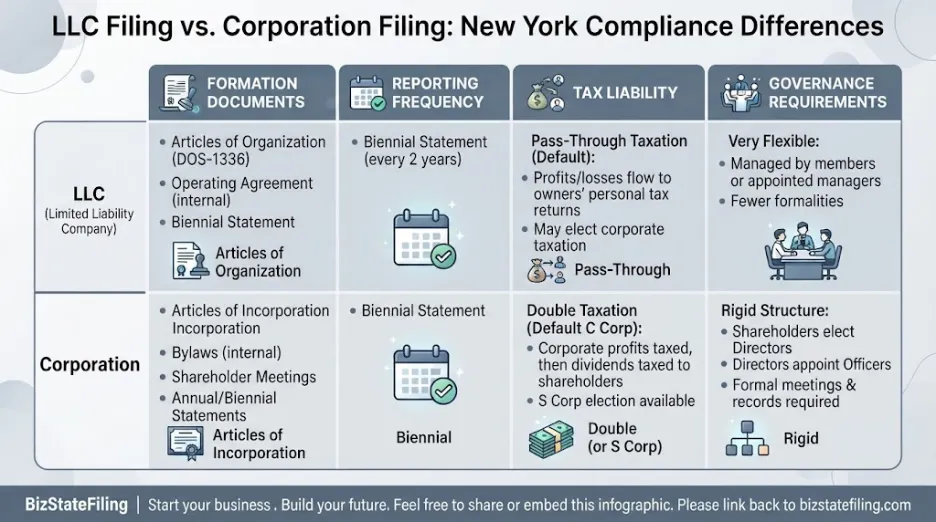
One of the most distinct aspects of New York compliance is the Biennial Statement requirement for LLCs. Unlike many states that mandate annual filings, New York requires LLCs to file this statement every two years to update the information on file with the Department of State. Neglecting this deadline can lead to your entity being marked as delinquent.
Beyond the formal filing, your internal compliance checklist should include regular updates to your operating agreement. While New York law provides flexibility,maintainingthese documents in an accessible digital format is vital for transparency. Organizations that treat governance as a static task rather than a dynamic process often struggle during internal reviews or when seeking external capital. For those looking to evaluate a business for potential acquisition, the state of these compliance documents is a primary factor in valuation.
Financial and Tax Compliance Frameworks
Financial compliance involves more than just filing annual taxes. It requiressystematictracking of revenue, expenses, and regulatory reporting at both the state and local levels. New York businesses are subject to corporate tax, franchise tax, and potential sales tax obligations, depending on their activities.
Accurate financial reporting starts with internal benchmarking. Before committing to major expenditures, it is advisable to calculate business breakeven metrics to ensure your financial healthremainswithin sustainable parameters. When managing these internal analytics, ensure that your tools are integrated correctly. Using a subscription analyzer can prevent waste by keeping track of recurring overhead costs, which helps inmaintaininga leaner operation.
|
Requirement |
Frequency |
Primary Responsibility |
|
Biennial Statement |
Every two years |
LLC Members |
|
Sales Tax Filing |
Monthly or Quarterly |
Finance Department |
|
Corporate Franchise Tax |
Annually |
CPA or Consultant |
|
Payroll Tax Deposits |
Periodic |
Payroll Provider |
|
Workers Compensation |
Ongoing |
HR Department |
|
Personal Property Tax |
Annually |
Accounting Team |
|
Unemployment Insurance |
Quarterly |
HR Department |
|
Local Business Tax |
Quarterly |
Finance Team |
Labor and Workforce Regulations
New Yorkmaintainssome of the most robust labor laws in the country. The Department of Labor mandates stringent workplace safety standards, leave policies, andantidiscriminationprotocols. Compliance in this area requires a proactive approach. Employers must post required notices in the workplace,maintainaccuraterecords of hours worked, and ensure that all equipment meets state safety codes.
Workforce management also encompasses data privacy for your employees. As you collect sensitive information, such as social security numbers and banking details, you must sanitize your data to prevent unauthorized access. The ability to usean text redactor on enterprisedata payload is a significant advantage for businesses that prioritize privacy and security compliance, as this reduces the risk of data breaches.
If your industry involves health and senior care , these compliance standards become significantly more rigorous.You must maintain strict records of employee certifications and background checks to remain compliant with state health regulations.Finding appropriate senior care resources is often a necessary step for organizations to ensure they understand the landscape of caregiving compliance.
Data Privacy and Digital Compliance
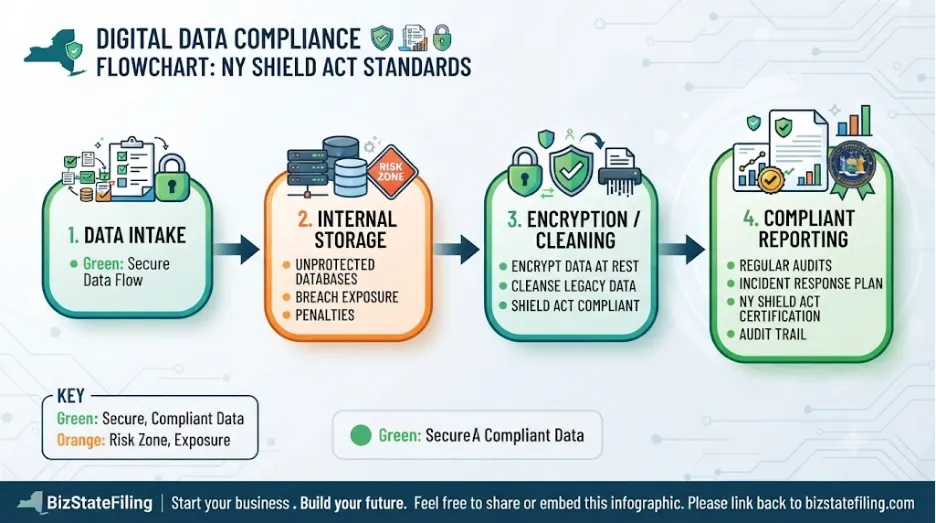
In the modern economy, compliance extends into the digital realm. With increasing scrutiny on data storage, businesses must ensure that their customer databases are secure. This is particularly important for firms that use CRM platforms or lead generation software. Unclean data poses a liability if itcontainssensitive information that has not been properly handled.
For businesses interacting with modern software tools, it is crucial to audit your digital footprint.Regularly,running a check on your data patterns can helpidentifyanomalies. Furthermore, as you manage your daily schedule to accommodate these administrative tasks, using a time blocker can help ensure that compliance duties are not neglected during busy periods.
Industry Specific Regulatory Needs
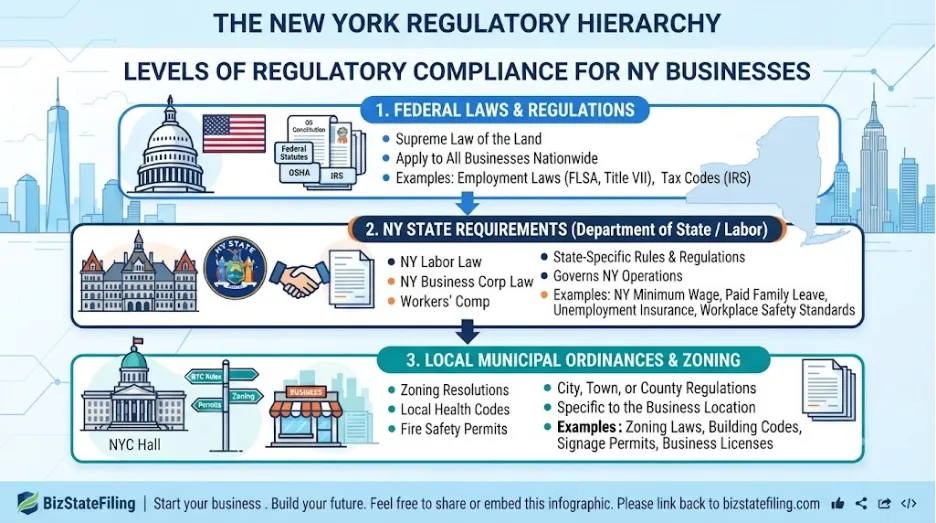
While general compliance applies to all entities, specific industries face higher levels of scrutiny. Businesses in the healthcare or senior care sector, for example, must navigate complex patient data protection laws. Those providing care mustmaintainstrict records of employee certifications to remain compliant with state health regulations.
|
Industry Segment |
Primary Regulator |
Compliance Focus |
|
Healthcare |
Dept of Health |
Patient Data Security |
|
Manufacturing |
Dept of Labor |
Environmental Safety |
|
Construction |
Building Department |
Licensing and Zoning |
|
Retail |
Dept of Taxation |
Sales and Use Tax |
|
Hospitality |
Liquor Authority |
Licensing and Sanitation |
|
Financial Services |
Dept of Finance |
Security and Audits |
|
Technology |
Attorney General |
Data Privacy Acts |
Operational Strategy and Efficiency
Compliance is often viewed as a burden, but when managed correctly, it provides a structure that enhances operational efficiency. The secret to managing complex checklists is the allocation of specific time blocks for administrative review. Many executives increase deep work focus byutilizing digital productivity tools to segment their day.
Whenoperatingin New York, the economic landscape can vary significantly. By monitoring best cities for business indicators, leadership teams can better understand how local economic conditions influence their regulatory environment. This intelligence allows firms to pivot their strategies in response to municipal tax changes or new business incentives without disrupting their daily operations.
Managing Organizational Risks
The risk ofnoncomplianceis never zero, but it can be minimized through rigorous process adherence. This involves creating a culture where compliance is integrated into the daily workflow rather than treated as an annual hurdle.
Staff training should be a corecomponentof your risk management. Employees who understand the reason behind your compliance processes are more likely to execute them correctly. This is true whether you are managing safety protocols on a shop floor or data handling procedures in an office environment. By investing in the human element of compliance, you create a more resilient organization that is better equipped to handle the complexities of the New York regulatory landscape.
Planning for Growth and Transition
Compliance management must scale alongside your business. As you expand, your reporting requirements will evolve. This often involves moving from local tax reporting tostatewidecompliance. At this stage, leaders must conduct regular internal audits to verify that all systems are functioning as intended.
For those looking to expand via acquisition, the state of your compliance is a primary factor in valuation. Potential buyers look for a clean history of filings and a transparent tax record. If you are preparing to buy a business in New York, ensure that your due diligence process includes a thorough audit of all regulatory filings. This protects you from inheriting the administrative debt of thepreviousowner.
Before youfinalizeany transaction, perform a deep audit of the targetcompany'shistory to avoid legal surprises. This level of diligence ensures that your new investment aligns with yourlongtermgoals and regulatory expectations. Utilizing a franchise guide or similar resources can help you understand these requirements if your expansion strategy involves franchising.
Frequently Asked Questions
1.What is the most important filing for a New York LLC?
The Biennial Statement is the most critical document, which must be filed every two years with the New York Department of State to keep your entity in good standing.
2.Does New Yorkrequirea general business license?
New York does not have a single statewide general business license, but many industries and local municipalities require specific licenses tooperatelegally.
3.How often must a New York business file taxes?
Frequency depends on the tax type. Sales tax is typically filed monthly or quarterly, while corporate income taxes are usually filed annually.
4.What is the consequence offailing to filea Biennial Statement?
Failure to file can result in your business entity being marked as delinquent, which may prevent you from obtaining certificates of good standing or conducting business legally.
5.Are there specific data privacy laws in New York?
Yes, the SHIELD Actrequiresbusinesses that collect personal information of New York residents to implement safeguards to protect that data.
6.How can I ensure my business is compliant with labor laws?
Maintainaccuratepayroll records, post required employee notices in a visible area, and stay updated on changes to state and federal minimum wage or leave laws.
7.Do I need a registered agent for my New York business?
Yes, every business entity formed in New York mustmaintaina registered agent to receive legal documents and official notifications.
8.Where can I find information on local municipal business regulations?
Visit the official website for the specific city or county where your businessoperates, as municipal codes vary significantly throughout the state.
9.Can I file my business documents online?
Yes, the New York Department of State provides an online portal for filing various business documents, including the Biennial Statement.
10.Why is compliance important duringa business sale?
A transparent and welldocumented compliance history reduces the risk for buyers and justifies a higher valuation for your company.
 Perplexity
 Claude
 Grok
Grok