





Operating a business in California is a significant undertaking that requires not only vision and ambition but also a rigorous commitment to administrative precision. As the largest economy in the United States, California offers an unparalleled marketplace for innovation, retail, technology, and professional services. However, the potential for high growth is balanced by a stringent regulatory framework that mandates ongoing transparency, fiscal discipline, and strict adherence to state statutes. This comprehensive guide provides entrepreneurs and business leaders with the granular knowledgerequiredto navigate the legal, financial, and operational requirements necessary tomaintaingood standing in the Golden State.
The Regulatory Foundation of California Business
Establishing a business presence in California begins with a clear understanding of the regulatory expectations set forth by the California Secretary of State . Whether you are anearlystagestartup or an enterprise expanding into new markets, formalizing your entity is a critical first step. You should begin by thoroughly vetting the filing requirements for your specific business type.
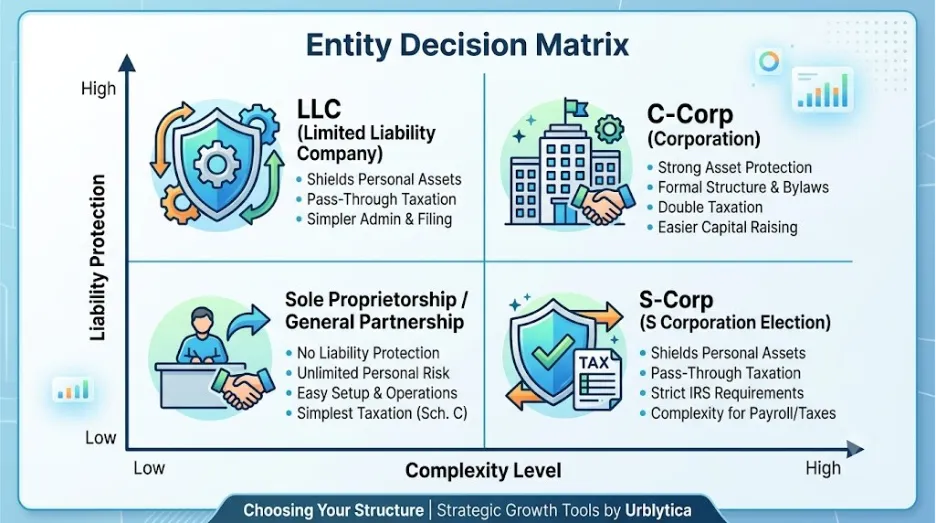
Registration is not merely a formality; it is the establishment of a legal identity that allows you to start a business with institutional backing. The decision betweenaLimited Liability Company (LLC), a C-Corporation, or an S-Corporation is foundational. Each entity structure triggers different documentation requirements, such as Articles of Organization for LLCs or Articles of Incorporation for corporations. Proper vetting of your business name and the appointment of a registered agent arenonnegotiablesteps that secure your operational standing from day one. For those who need to understand the broader market, checking business guides is highly recommended.
The process of forming a company in California involves several layers ofstatelevelinteractions. First, you must select your entity type. The California Secretary of State requires specific filings thatidentifyyour purpose and your management structure. Beyond the state level, you must ensure that your local municipality, whether in Los Angeles, San Francisco, or San Diego, has noadditionalbusiness licensing requirements. Often, local permits are independent ofstatelevel registration, andfailing to securethese can result in immediate fines or administrative hurdles.
Comparative Analysis of California Business Entities
Choosing the right entity structure isperhaps themost consequential decision a founder will make. It dictates your tax burden, personal liability, and administrative workload. The following analysis outlines the primary differences between the most common structures to help you align your choice with yourlongtermbusinessobjectives.
|
Entity Type |
Formation Complexity |
Liability Protection |
Annual Compliance |
Taxation Type |
|
Sole Proprietorship |
Low |
None |
Minimal |
Personal Income |
|
General Partnership |
Low |
Low |
Minimal |
Pass-through |
|
Limited Liability Company |
Moderate |
High |
Moderate |
Pass-through/Corp |
|
C-Corporation |
High |
High |
High |
Double Taxation |
|
S-Corporation |
High |
High |
High |
Pass-through |
For founders planning to buy a business in California, conducting a comprehensive audit of the target company's current structure is essential. Unpaid liabilities from thepreviousowner, especiallyregardingfranchise taxes, can be transferred to the new owner during the acquisition process. Utilizing structured financial tools allows you to model your cash flow and ensure you are prepared for the mandatory annual tax burden.
California Franchise Tax and Annual Requirements
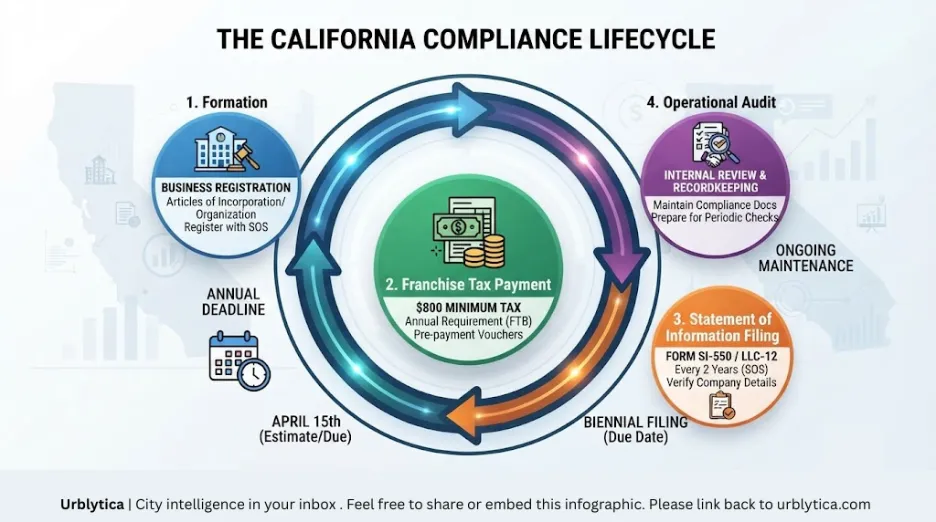
California imposes a mandatory minimum franchise tax on most business entities, which is a unique feature of the state’s tax code. This annual obligation is fixed at 800 USD and must be paid by most active LLCs and corporations regardless of whether the business generated a profit during the tax year. Understanding this financial burden is a fundamental aspect of the discipline required for business services providers tomaintaingood standing.
Beyond the tax, entities must file the Statement of Information. This report confirms essential business details, including the current address andidentityof key officers or managers. Failure to file this report on time leads to penalties that can disrupt your ability to transact business. If you areoperatingin a hub like Los Angeles, your administrative operations must be as robust as your marketing strategy. For deeper citylevel insights, visit the Urblytica City Intelligence Dashboard .
Financial Management and Operational Sustainability
Operational efficiency is the hallmark of a sustainable business. Founders must view regulatory costs, such as the annual franchise tax and filing fees, as fixed operational expenses rather than optional burdens. To ensure your business modelremainsviable, you should perform regular financial checkups andmaintainstrict separation between personal and business accounts.
You can calculate your breakeven point todeterminehow much revenue isrequiredto cover these fixed regulatory costs alongside your variable expenses.
When you are assessing your business performance in a city like San Diego, you must account for local variations in the cost of doing business. If you find youroverheadclimbing withouta commensurateincrease in revenue,utilizea subscription analyzer toidentifyand prune unnecessary recurring costs. Managing your cash flow is critical when dealing with statemandated expenses like the franchise tax.

Labor and Employment Compliance
Californiamaintainsthe most rigorous labor laws in the country. Businesses must navigate complex issues ranging from overtime rules to the classification of independent contractors versus employees. Compliance in this area requires a deep knowledge of both state and federal regulations. For companies involved in home services franchises , managing staff and ensuring they have the correct certifications is a vitalcomponentof daily operations.
Many employers in urban centers like San Francisco struggle with the volatility of the labor market and strict local ordinances that often exceed state requirements. Proper documentation of every employee interaction and clear internal policies serve as your best defense during an audit. For deeper citylevel insights into market conditions, visit the Urblytica City Intelligence Dashboard . Failure tocomply withCalifornia employment law can lead to severe penalties, including wage and hour lawsuits, which can be far more costly than theinitialpayroll expenses.
Data Security and Privacy Standards
In the modern era, data compliance is inseparable from corporate compliance. California has led the nation in privacy regulations through the California Consumer Privacy Act (CCPA) and the California Privacy Rights Act (CPRA), forcing businesses to be transparent about how they handle user information. Whether you are in advertising or accounting and finances , your data practices must be documented and secure.
Auditing your digital footprint is now a standard part of due diligence. If your company reaches a stage where you are considering an acquisition, you must present a clean history of your data privacy compliance to the purchasing entity. This level of transparency increases the valuation of your business and speeds up the transition process.
Performance Metrics for LongTerm Growth
To remain competitive, you should track your performance against industry benchmarks. The Return on Investment (ROI) for your equipment or marketing campaigns is a primary metric tovalidateyour business decisions.
By constantlymonitoringyour ROI, you can pivot your strategy before a minor inefficiency becomes a major financial drain. Whether you are managing coffee franchises or a professional consultancy, datadriven decisions are the only way to navigate the complexities of the California market.
Regional Growth Strategies and Expansion
Scaling across California requires a localized strategy. The economic conditions in Sacramento, for instance, favor different industries than those in the tech corridors of the Bay Area. When you decide to enter new regions, you must conduct a thorough market analysis to ensure your model aligns with the local consumer base.
Founders looking to expand often explore franchise opportunities as a way to leverage established models while navigating regional compliance. If your business involves complexlogisticsor large databases, you must ensure that your address records areaccurate. You should clean enterprise data periodically to avoid errors in your tax filings and regulatory reports. For deeper citylevel insights, visit the Urblytica City Intelligence Dashboard .

Strategic Operational Management
Consistent recordkeeping prevents the accumulation of administrative debt. Using a time blocker to schedule your compliance filing deadlines is a simple yet effective method to ensure you never miss a statemandated date. If you areoperatingin a dense environment like Oakland, you need to manage your time and resources with high precision. For deeper citylevel insights, visit the Urblytica City Intelligence Dashboard .
In addition to state filings, businesses must manage their federal tax identifiers. The Employer Identification Number is the cornerstone of your financial life in the United States. Once you have this number, you mustmaintainseparate ledgers for personal and business expenses. This separation is a legal necessity for preserving the limited liability protection of your entity.
Essential Compliance Tasks Checklist
The following table provides a structured approach tomaintainingyour status as a compliant entity in California. This schedule ensures you can manage your obligations without the risk of suspension or penalties.
|
Compliance Area |
Responsibility |
Frequency |
Action Item |
|
State Registration |
File Articles |
One-time |
Secretary of State filing |
|
Franchise Tax |
Payment |
Annual |
800 USD minimum |
|
Business Reporting |
Statement of Information |
Biennial |
Official filing portal |
|
Federal Compliance |
EIN Maintenance |
As needed |
IRS updates |
|
Labor Records |
Payroll/Overtime Logs |
Monthly |
Internal audit |
|
Digital/Data Privacy |
Audit |
Annually |
Security review |
Deep Dive: Managing Administrative Debt
Administrative debt refers to the accumulation of unfinished or delayed regulatory tasks that, while notimmediatelyfatal, create significant drag on a company’slongtermagility. In California, administrative debt often manifests as missed Statement of Information deadlines, neglected annual tax payments, or poor recordkeepingregardingindependent contractor classifications. To mitigate this debt, you must treat compliance as an operationalcore ofcompetency, not an external tax burden. This involves quarterly audits of your corporate standing to ensure that all filings are current and that your registeredagent'sinformation isaccurate. Many startups fail because they reach a scaling point only to find that they are barred from financing due to an unaddressed compliancesuspensionthree years prior. Do not allow your past administrative lapses to dictate your future growth potential.
Due Diligence and Corporate Governance
As your entity grows, your governance structure becomes critical. Establishing a clear set of bylaws or an Operating Agreement that defines member roles, decisionmaking authorities, and dispute resolution processes is essential. If you are preparing tobringinvestors or seeking institutional capital, your due diligence file will be the first thing scrutinized by potential partners. They will want to see that your entity was formed correctly, that you have a consistent history of filings, and that you have appropriately separated your business and personal financial lives. Poor governance leads to uncertainty, and uncertainty is the enemy of investment.
The Role of External Expertise
Navigating the California landscape can be arduous, and it is often prudent toengage inexternal professional services. Whether it is a tax accountant familiar with California's uniquerevenuebasedtax calculations or a specialized business attorney to draft employment contracts, these investments are typically offset by the avoidance of penalties and the mitigation of legal risk. Do notattemptto master the entirety of California business law yourself. Instead, focus on building a robust advisory network that can provide you with targeted, actionable advice when you reach critical junctures, such as annual filings, hiring your first employee, or considering a merger.
Frequently Asked Questions
1.Is the LLC structure the best choice for California businesses?
For many entrepreneurs, the LLC is the preferred structure because it limits personal liability while offering significant tax flexibility compared to other entities.
2.What is the annual franchise tax obligation for a California LLC?
Californiarequiresa minimum annual franchise tax of 800 USD, which must be paid by most active LLCs regardless of income.
3.How often must I file a Statement of Information with the state?
You must file the Statement of Information shortly after yourinitialformation and every two years thereafter to confirm your business details.
4.What happens if Ifail tofile my regulatory reports?
Failure to file can result in monetary penalties, the suspension of your business rights, and potentially the inability to defend yourself in state courts.
5.Is it necessary to appoint a registered agent for my California business?
Yes, you are required by law to appoint a registered agent to receive service of process and official government correspondence on behalf of your entity.
6.How do I obtain an Employer Identification Number?
You can obtain an EIN from the IRS website once your business formation has been officially approved by the Secretary of State.
7.Does California law require an Operating Agreement?
While the state does not require you to file the document, an Operating Agreement is a vital internal tool for managing member roles and conflict resolution.
8.Can I change my business nameafterformation?
Yes, you can file an amendment with the Secretary of State to update your business name if your branding strategy changes.
9.How do I know if my industry requires special licenses in California?
You should consult with professional business advisors orcheck outthe official California state portal todetermineif your specific industry requires localized permits.
10.What is the best way to trackrecurringbusiness expenses?
Using automated auditing and financial tools can help youmaintainvisibility over your overhead and ensure you are not paying for unused services or subscriptions.
 Perplexity
 Claude
 Grok
Grok