




Navigating the regulatory environment in the Great Lakes State requires a disciplined approach to operational management.Whether you are launching a new enterprise or managing an established company,maintainingstrict adherence to state and federal statutes is essential for longterm viability. This comprehensive guide serves as a strategic roadmap for business owners who must reconcile complex administrative burdens with the goal of sustainable growth.
The Foundation of Regulatory Compliance
The regulatory landscape in Michigan is managed primarily through the Department of Licensing and Regulatory Affairs, commonly referred to as LARA. This body oversees entity formation, professional licensing, and corporate governance standards. Businesses thatfail toalign their operations with LARA requirements often face penalties, administrative dissolution, or the suspension of their legal standing.
For entrepreneurs preparing to enter the market, the first step is to ensure that theinitialstructure is correct. Many foundersutilizea professional business registration platform like bizstatefiling.com to ensure that their Articles of Organization or Articles of Incorporation meet statespecific criteria. Establishing a strong legal foundation is not merely a formality; it is a criticalcomponentof risk mitigation. If you are preparing to start a business in Michigan, the entity type you select determines your ongoing tax liabilities and reporting obligations.
When you analyze the regional business climate for your new venture, consider how your choice of location affects your regulatory burden. A city like Detroit or Grand Rapids may have specific municipal ordinances that layer upon the state requirements. Using a relocation intelligence tool can help youidentifycities where the economic health metrics align with yourlongtermgoals.
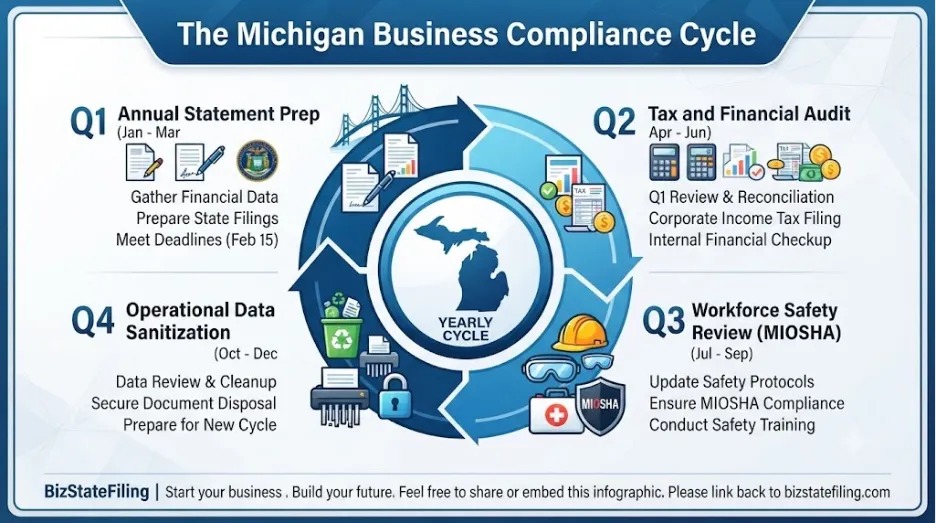
Annual Governance and Reporting Obligations
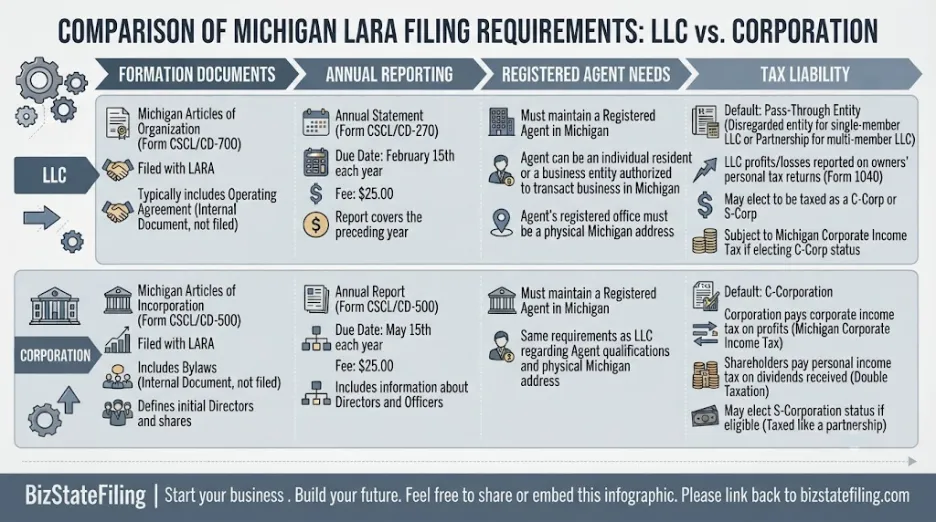
One of the most common pitfalls for business entities in Michigan is the neglect of the Annual Statement. This filing is mandatory for LLCs and domestic corporations. The filing process updates the state on the status of your registered agent, principal office address, and authorized officers. Failure tosubmitthis on time can lead to the administrative dissolution of your entity, effectively stripping you of your corporate veil and personal liability protections.
Beyond the Annual Statement, your checklist should include regular updates to internal governance documents. While Michigan law provides significant flexibility for LLCs to structure their own operating agreements,maintainingthese documents in an accessible digital format is vital for transparency and compliance. Organizations that treat governance as a static task rather than a dynamic process often struggle during audits or when seeking external capital.
For those who are interested in a franchise guide to understand how different structures impact compliance, it is important to note that franchised entities often have specific oversight reporting requirements that stand apart from standard LLC filings.
Financial and Tax Compliance Frameworks
Financial compliance involves more than just tax filing; it requiressystematictracking of revenue, expenses, and regulatory reporting. Michigan businesses are subject to the Michigan Business Tax, or in many cases, the Corporate Income Tax, depending on the specific legal structure and nexus.
Accurate financial reporting starts with internal benchmarking. Before committing major expenditures or expansion, it is advisable to calculate business breakeven metrics to ensure your financial healthremainswithin sustainable parameters. When managing these internal analytics, businesses must ensure that their software tools are integrated correctly. Using a subscription analyzer can prevent waste by keeping track of recurring overhead costs.
|
Requirement |
Frequency |
Primary Responsibility |
|
Annual Statement |
Annually |
Management or Owners |
|
Sales Tax Filing |
Monthly or Quarterly |
Accounting Department |
|
Corporate Income Tax |
Annually |
CPA or Tax Consultant |
|
MIOSHA Compliance Log |
Ongoing |
Operations or HR |
|
Local City Taxes |
Quarterly or Annually |
Finance Team |
|
Payroll Tax Deposits |
Periodic |
Payroll Provider |
|
Unemployment Insurance |
Quarterly |
HR Department |
|
Personal Property Tax |
Annually |
Finance or Accounting |
Labor and Workforce Regulations
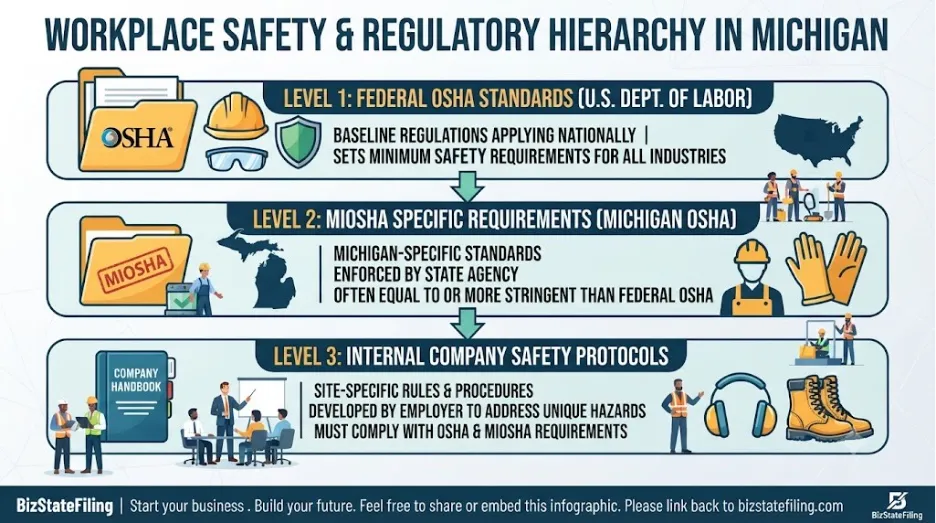
Michiganmaintainsrobust labor laws, including the Michigan Occupational Safety and Health Administration, or MIOSHA. This agency sets and enforces workplace safety standards that often exceed federal mandates. Compliance in this area requires a proactive approach rather than a reactive one. Employers must post required notices,maintainaccuratelogs of workplace injuries, and ensure that all equipment meets state safety codes.
Workforce management also encompasses data privacy for your employees. As you collect sensitive information, such as social security numbers and banking details, you must sanitize your data to prevent unauthorized access. The ability to usean text redactor on enterprisedatapayloadis a significant advantage for businesses that prioritize privacy and security compliance, as this reduces the risk of data breaches and internal compliance failures.
If your industry involves senior care or medical services, these compliance standards become significantly more rigorous.You must maintain strict records of employee certifications and background checks to remain compliant with state health regulations.
Operational Strategy and Efficiency
Compliance is often viewed as a burden, but when managed correctly, it provides a structure that enhances operational efficiency. The secret to managing complex checklists is the allocation of specific time blocks for administrative review. Many executives increase deep work focus byutilizing time blocking software tools to segment their day, ensuring that compliance tasks are not leftuntilthe end of the quarter.
Whenoperatingin specific Michigan markets, the economic landscape can vary significantly. By monitoring business growth indicators, leadership teams can better understand how local economic conditions influence their regulatory environment. This intelligence allows firms to pivot their strategies in response to municipal tax changes or new business incentives without disrupting their daily operations.
Industry Specific Compliance
While general compliance applies to all entities, specific industries face higher levels of scrutiny. For instance, businesses in the healthcare sector must navigate complex patient data protection laws. Those involved in residential senior care options must adhere to strict statelevel certifications and facility management protocols tomaintaintheir licenses.
Construction firms, retail establishments, and manufacturing plants each have their own unique set of safety and environmental regulations. Creating a tailored checklist for your industry is essential to prevent costly oversight.
|
Industry Segment |
Primary Regulator |
Compliance Focus |
|
Healthcare |
Dept of Health |
HIPAA and Patient Data |
|
Manufacturing |
MIOSHA and DEQ |
Safety and Environmental |
|
Construction |
LARA |
Licensing and Safety |
|
Retail |
Dept of Treasury |
Sales and Use Tax |
|
Hospitality |
LARA and Liquor Control |
Licensing and Sanitation |
|
Financial Services |
Dept of Insurance |
Security and Audits |
|
Transportation |
Dept of Transportation |
Fleet and Safety |
|
Tech Services |
State Attorney General |
Data Privacy |
Data Sanitization and Privacy
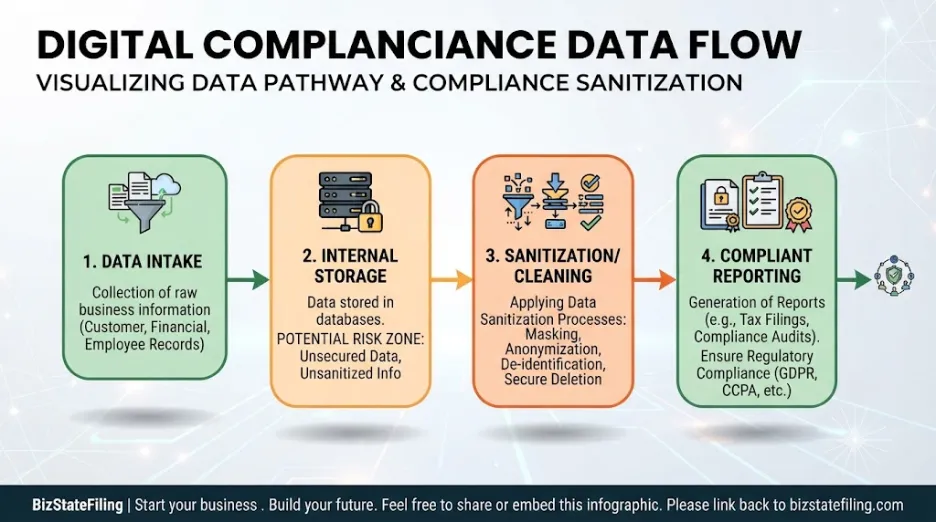
In the modern digital economy, compliance extends into the digital realm. With increasing scrutiny on data storage, businesses must ensure that their customer databases are clean and secure. This is particularly important for firms that use CRM platforms or lead generation software. Unclean data does not just degrade marketing performance; it poses a liability if that datacontainssensitive information that has not been properly handled.
If your business interacts with LLMs or other AI technologies, the security of your inputs is paramount. Businesses must sanitize LLM inputs to prevent the accidental leakage of proprietary business intelligence. A compliance strategy that ignores digital security is incomplete, as the risk of digitalnoncomplianceis rapidly becoming as significant as the risk of physical regulatory failure.
Planning for Growth and Transition
Compliance management must scale alongside your business. As you expand, your reporting requirements will evolve. This often involves moving from local tax reporting tostatewideormultistatecompliance. At this stage, leaders must conduct regular internal audits.
For those looking to expand via acquisition or those considering an exit, the state of your compliance is a primary factor in valuation. Potential buyers look for a clean history of filings and a transparent tax record. If you are preparing to buy a business in Michigan, ensure that your due diligence process includes a thorough audit of all regulatory filings. This protects you from inheriting the administrative debt of thepreviousowner.
Before youfinalizeany business for sale agreement, perform a deep audit of the targetcompany'scompliance history to avoid legal surprises.
Managing Organizational Risks
The risk ofnoncomplianceis never zero, but it can be minimized through rigorous process adherence. This involves creating a culture where compliance is integrated into the daily workflow rather than treated as an annual hurdle.
Staff training should be a corecomponentof your risk management. Employees who understand the why behind your compliance processes are more likely to execute them correctly. This is true whether you are managing safety protocols on a shop floor or data handling procedures in an office environment. By investing in the human element of compliance, you create a more resilient organization that is better equipped to handle the complexities of the Michigan regulatory landscape.
Frequently Asked Questions
1.What is the most critical document for Michigan LLC compliance?
The Annual Statement is the most critical document. It must be filed with LARA annually to ensure your businessremainsin good standing.
2.Does Michiganrequirea state business license?
Michigan does not have a single general business license. However, depending on your industry and location, you may need specific professional or occupational licenses tooperatelegally.
3.How often mustMichiganBusiness Filetaxes?
Frequency depends on the tax type. Sales tax is typically filed monthly or quarterly, while corporate income taxes are usually filed annually. Check with the Michigan Department of Treasury forspecificrequirements.
4.What happens if I miss the Annual Statement deadline?
Missing the deadline can result in late fees and eventually the administrative dissolution of your business, which removes your legal liability protections.
5.Are there specific safety regulations in Michigan?
Yes, MIOSHA enforces workplace safety standards. These regulations are mandatory foralmost allemployersoperatingwithin the state.
6.How can I ensure my business data is compliant?
Maintain clean databases, sanitize your digital inputs, and ensure all customer data is storedin accordance withstate and federal privacy laws.
7.Do I need a registered agent for my Michigan business?
Yes, every business entity formed in Michigan mustmaintaina registered agent with a physical address in the state to receive legal and official documents.
8.Where can I find information on local business regulations?
Local municipal websites and the LARA official portal are the primary sources for cityspecific business ordinances and zoning requirements.
9.Is it possible tofilebusiness changes online?
Yes, LARA provides an online portal that allows businesses to file amendments, annual statements, and other essential documents electronically.
10.What is the importance of compliance during a business sale?
A history of clean and consistent compliance increases the value of your business during a sale, as it reduces the risk profile for potential buyers or investors.
 Perplexity
 Claude
 Grok
Grok