





Forming a Limited Liability Company in California is a significant milestone for any entrepreneur. It requires a deep understanding of the regulatory landscape and a commitment to rigorous operational compliance. California is home to some of the most dynamic business environments in the world, and it offers unique advantages for founders who are prepared to navigate the administrative requirements. This guide provides a thorough walkthrough forestablishingyour business, maintaining full regulatory compliance, and positioning your company for longterm scalability.
The Strategic Foundation of the California LLC
The Limited Liability Company structureremainsthe preferred entity for modern entrepreneurs who prioritize flexibility and protection. An LLC provides the legal separation between your personal assets and business liabilities, effectively shielding your private wealth from the risks inherent in commercial operations. When you choose to incorporate your business online , you areestablishinga foundational architecture that will support your firm through its growth phases.
Californiaoperatesunder thejurisdictionof the Secretary of State, whichmaintainsstrict guidelines for domestic and foreign entities. The state attracts highgrowth tech startups,establishedprofessional services, and retail operations, making it a pivotal location for business strategy. Before you begin the formation process, you must evaluate your internal governance andlongtermfinancial structure. If you are examining regional data to choose a headquarters, you might find that the economic climate in specific hubs varies significantly. For deeper citylevel insights, visit Urblytica’s City Intelligence Dashboard .
Preliminary Business Planning and Market Analysis
Before filing your legal documents, your planning phase must be robust. Many founders rush into registration withoutidentifyingtheir truebreakevenpoints or conducting a proper market feasibility study. Entrepreneurs should prioritize professional diagnostic tools to calculate business breakeven point metrics to ensure that theiranticipatedrevenue streams can comfortably cover both federal tax obligations andCaliforniaspecificfranchise taxes.
Your business plan should also incorporate a realistic assessment of the local competition. A startup launching in a dense hub like San Francisco requires a different strategic approach than one launching in a smaller, emerging market. Your operational overhead will depend heavily on the demographic and economic profile of your chosen region. Aligning your model with local economic data helps you avoid the common pitfalls that cause new entities to falter within their first three years.
Selecting a Business Name
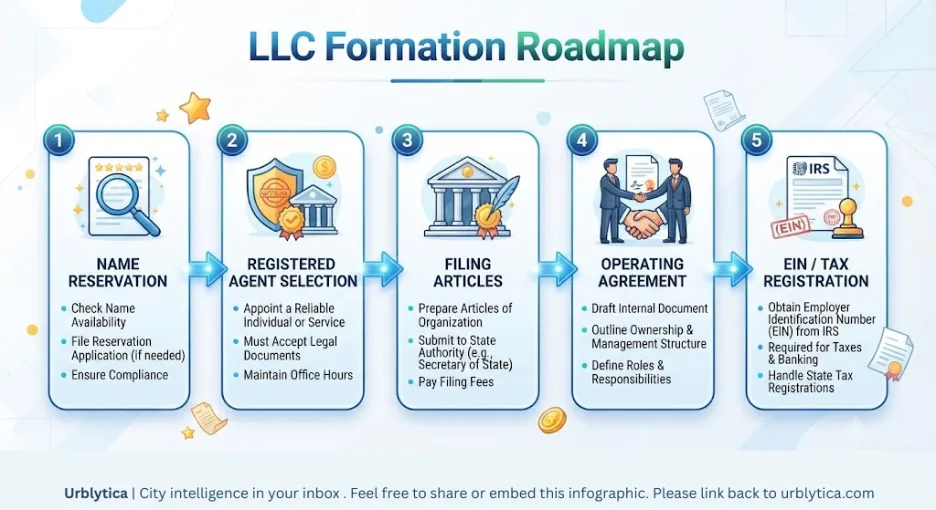
Your brand identity starts with your name. Under California law, your company name must be distinguishable from other entities on file with the Secretary of State. You must perform a comprehensive name availability search to ensure no conflicts exist.
It is advisable to check name availability beyond the state database, including federal trademark records and domain registration sites. If you have already researched your market and are ready toproceed, you can use a professional business registration platform to secure your legal presence efficiently. A wellvetted name prevents future legal disputes andbrandingconfusion as your business grows.
The Role of the Registered Agent
California mandates that every LLCdesignatesa registered agent to accept service of process and official government correspondence. This agent mustmaintaina physical address in the state and be available during standard business hours. While some ownersattemptto serve as their own agents, this approach can compromise your privacy and operational flexibility.
Most professional founders choose to engage statutory registered agent services to ensure they never miss a court document or state notice.Maintainingthis professional barrier is essential for your security. A reliable agent ensures that your legal mail is handled, processed, andforwardedsecurely, allowing you to focus entirely on your businessobjectivesrather thanmonitoringa physical mailbox.
Drafting the Articles of Organization
The Articles of Organization represent the formalinceptionof your legal entity. This document must besubmittedto the Secretary of State and provides the foundational details of your business, such as your management structure and agent information. Accuracy at this stage is critical, as minor clerical errors can result in rejected filings and delays.
Many entrepreneurs choose toutilizea turnkey business formation tool to navigate these requirements. This software ensures that all necessary clauses are includedin accordance withcurrent state statutes. Once the state approves your filing, you are legally recognized as a business entity, clearing the path toproceedwith federal tax registration and banking.
The Importance of an Operating Agreement
Although California law does not explicitly mandate that you file an Operating Agreement with the state, you must prioritize this document for your own internal governance. This agreement dictates profit distribution, management responsibilities, and conflict resolution mechanisms among members.
Without a formal agreement, your LLC is subject to default state rules, which may not align with your specific business goals. If you have multiple partners, this document is your primary tool for mitigating future disputes. Even for singlemember LLCs, an Operating Agreement is a vital tool to prove to banks and courts that your business is a separate legal entity. If your entity requires external financial validation, you might also look at resources to financial planning for longterm care if your business involves healthcare or senior services.
Tax Registration and Employer Identification Numbers
After the state confirms your formation, you must secure an Employer Identification Number from the IRS. This ninedigit number acts as the tax identifier for your company. You will need an EIN for hiring employees, opening business bank accounts, and filing federal tax returns.
Financial discipline from day one is essential. You should register an EIN online as soon as your LLC is approved. This allows youtomove forward with your banking setup. Maintaining separate records for personal and business expenses is not just a bestpractice;it is a legal requirement to preserve your limited liability protection. If you are struggling with recurring expenses, you may alsobenefitfrom an subscription analyzer and burn rate tool to keep your overhead under control.
Financial Compliance and Operational Management
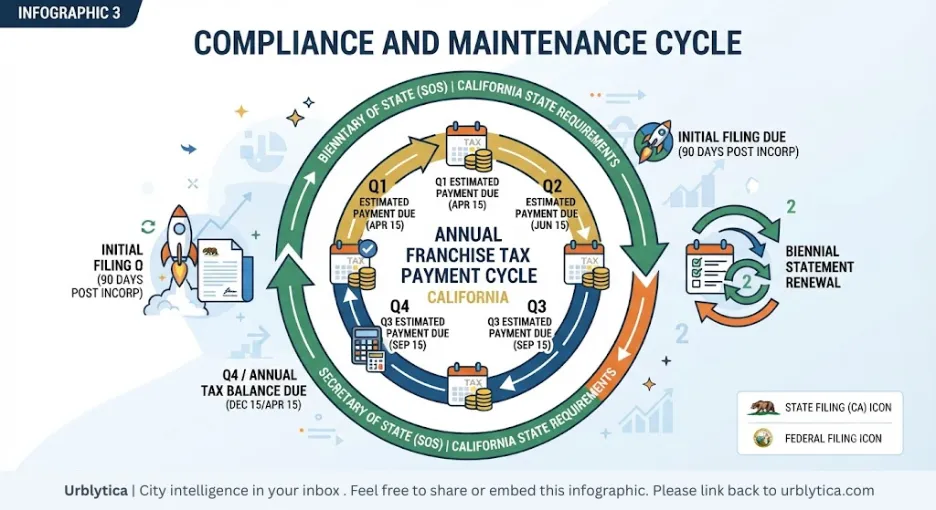
California imposes an annual franchise tax on LLCs, which is mandatory regardless of whether your company is currently generating profit. You must integrate these costs into your financial planning. Failure to pay this tax or file the necessary Statement of Information can result in late fees and administrative penalties that could lead to the suspension of your business rights.
Operational efficiency requires constant oversight. Many business owners struggle to track recurring software overhead and platform fees. Using financial auditing tools helps you manage these expenses and ensures that your marginsremainhealthy. Furthermore, if you are looking to expand your footprint, you might explore options to buy an established franchise shortcut the market entry process.
Comparative Entity Analysis
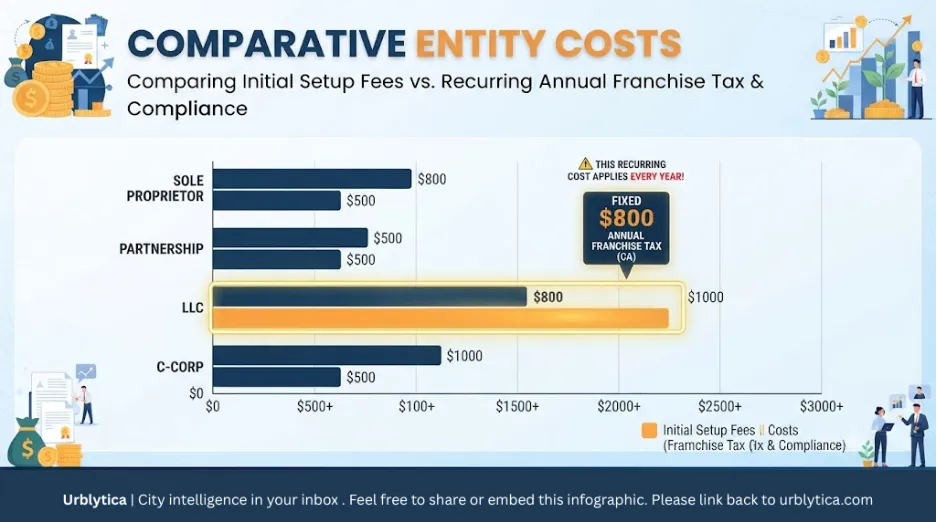
Choosing the right structure is a strategic decision that depends on your taxobjectivesand liability needs. The table below summarizes the core differences in administrative requirements and complexity for common business entities.
|
Entity Type |
Formation Complexity |
Liability Protection |
Annual Compliance |
|
Sole Proprietorship |
Low |
None |
Minimal |
|
LLC |
Moderate |
High |
Moderate |
|
C-Corporation |
High |
High |
High |
|
S-Corporation |
High |
High |
High |
|
Partnership |
Low |
Low |
Minimal |
Estimated Costs of LLC Maintenance
Financial preparation is the hallmark of a successful enterprise. The following estimates are based on general state requirements for a standard California LLC.
|
Cost Item |
Frequency |
Estimated Range |
Purpose |
|
State Filing Fee |
One-time |
70 USD |
Initial registration |
|
Franchise Tax |
Annual |
800 USD |
Mandatory state tax |
|
Registered Agent |
Annual |
100 - 300 USD |
Statutory service |
|
Statement of Information |
Biennial |
20 USD |
Compliance filing |
|
EIN Registration |
One-time |
0 USD |
Federal tax ID |
|
Professional Services |
Variable |
500 - 2000 USD |
Legal/Accounting |
Growth and Market Expansion in California
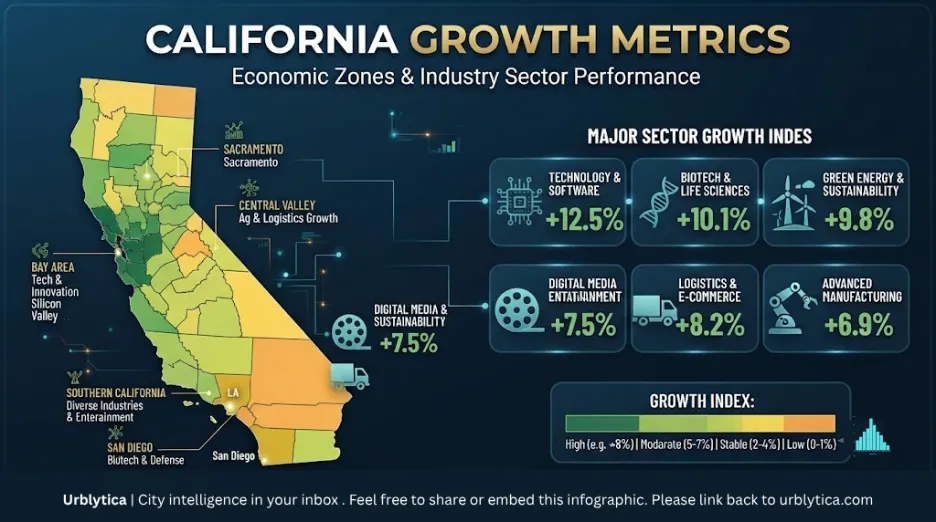
Scaling a business within the California economy requiresdatadrivendecisionmaking. You must track growth metrics and align them with your operational capacity. When you decide to enter new regions, conduct a regional business climate analysis to ensure your model isviable.
In industrial hubs, the cost of labor and infrastructure is high, requiring a lean approach to operations.If you need to manage your team effectively, you should format and deduplicate large lists tooptimizeyour marketing and operational communications. This ensures that your client outreachremainstargeted and professional as you scale.
Evaluating Market Growth Potential
The following table categorizes industry sectors based on typical growth potential and operational complexity to help you assess your strategic focus.
|
Industry Sector |
Growth Potential |
Complexity Level |
Strategic Focus |
|
Technology |
Very High |
High |
Scalability |
|
Professional Services |
Moderate |
Low |
Client Acquisition |
|
E-commerce |
High |
Moderate |
Logistics |
|
Healthcare |
High |
Very High |
Compliance |
|
Retail |
Moderate |
Moderate |
Inventory |
|
Real Estate |
Stable |
Moderate |
Asset Value |
Managing Human Resources and Professional Compliance
As your LLC matures, hiring staff brings new responsibilities. You must understand state payroll requirements,workers'compensation insurance, and employment law. Professionalizing your human resources operations prevents costly lawsuits and improves employee retention.
If your LLC is in the service or healthcare sector, you might also have specific certification needs. Always stay informed about the latest requirements. Whether you are managing your own payroll or outsourcing, ensure your records are pristine to avoid audits.
Advanced Strategies for Established Entities
For companies that have moved past the startup phase, focus onoptimizingyour recurring overhead. SaaS tools, monthly retainers, and subscription costs can quickly erode your net profit. Auditing yourcompany'ssubscription burn rates is a crucial task for any founder aiming to improve profitability.
Furthermore, if your company reaches a stage where it requires a formal transition or capital injection, you may look to explore franchise opportunities. Using a vetted business broker platform is a standard step in this process. You must carefully assess the market value and the operational health of any entity you consideracquiring.
Frequently Asked Questions
1.Is an LLC the best business structure in California?
The LLC is highly effective for most small businesses because it limits personal liability while offering tax flexibility.
2.What is the mandatory annual franchise tax in California?
All LLCs must pay an annual franchise tax of 800 USD, regardless of the income or profit generated by the entity.
3.Can I act as my own registered agent?
You can, but it isgenerally discouragedbecause it requires you to be available at your registered address during business hours and places your address on the public record.
4.How often must I file a Statement of Information?
You must file this report shortly after formation and every two years thereafter to confirm your business details with the Secretary of State.
5.Do I need an Operating Agreement for a singlememberLLC?
Yes, an Operating Agreement is vital todemonstrateto banks and courts that your LLC is a separate legal entity from yourself.
6.What is the process for registering an EIN?
You can obtain an EIN through the IRS website after your state entity formation is confirmed.
7.How does an LLC protect my personal assets?
An LLCestablishesa legal barrier, meaningthat generally, youare not personally responsible for business debts or lawsuits against the company.
8.Can Iregister fora foreign LLC in California?
Yes, if your company is formed in another state, you must complete the foreign qualificationprocesslegallyoperatingwithin California.
9.What happens if Ifail topay the franchise tax?
Failure to pay will result in penalties, interest, and the eventual suspension of your business rights in the state.
10.Where can I find professional help for entity formation?
You can consult official state resources or use a professional business registration platform to ensure compliance during your setup.
 Perplexity
 Claude
 Grok
Grok
