





Forming a Limited Liability Company in New York is a strategic undertaking that requires a blend of legal foresight and operational precision. As one of the most prominent commercial centers globally, New York offers a robust regulatory environment that rewards entrepreneurs who approach their entity setup with diligence. Whether you are launching a startup in the bustling corridors of New York City orestablishingaservice orientedentity in Buffalo, understanding thestate'sstatutes is the cornerstone of yourbusiness'slongevity.
The Strategic Importance of the LLC Structure
The decision toestablisha formal entity is the first major milestone for any business owner. By choosing an LLC, you are selecting a structure that provides a balance between the flexibility of a partnership and the protection of a corporation. This structure serves to shield your personal assets from the liabilities associated with your business operations. When you choose to start a business , you are moving beyond a simple trade name into a recognized legal status.
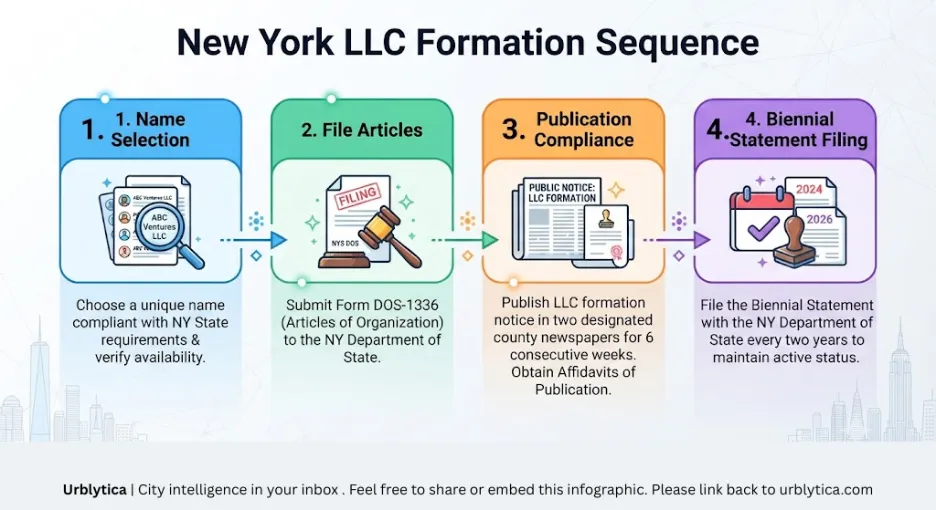
New York law allows for significant flexibility in how an LLC is managed, whether by members or by designated managers. This versatility is why many founders prioritize the LLC over other entities. However, achieving this protection requires adherence to strict filing and publication mandates. It is not enough to simply exist as a business; you must be compliant in the eyes of the Department of State.
Market Analysis and Regional Considerations
Before you file any documentation, you must assess the economic climate of your intended headquarters. New York is not a monolith; the business environment in Albany differs significantly from the industrial dynamics found in Rochester. For deepercity levelinsights, visit Urblytica’s City Intelligence Dashboard .
Founders often overlook the importance of local economic data. Your ability to scale depends on understanding the demographic shifts and the competitive density of your chosen region. When you navigate your path to startabusiness inNew York , you must consider the local tax implications and municipal requirements that go beyondstate levelfilings. Adata drivenapproach to site selection is necessary to ensurelong termviability. For deepercity levelinsights, visit Urblytica’s City Intelligence Dashboard .
Preliminary Financial Planning
Your business model must be grounded in reality, not just ambition. Financial modeling is a critical step that many founders skip. You should start byidentifyingyour breakeven point to ensure that your revenue projections are aligned with the costs of maintenance and compliance in New York.
If you need to calculate business breakeven metrics, you must include yourinitialfiling fees, publication costs, andanticipatedtax obligations. For those expanding into locations like Syracuse, your overhead will be influenced by local utility costs and labor market conditions. For deepercity levelinsights, visit Urblytica’s City Intelligence Dashboard .
Selecting and Reserving a Business Name
Your name is your brand identity. Under New York law, your company name must be distinguishable from other entities currently on file with the Department of State. It must alsocontainan identifier such as Limited Liability Company or L.L.C. While you are not legally required to reserve a name, it is a recommended step if you are not ready to file your Articles of Organizationimmediately.
However, many successful entrepreneurs prefer to use a professional business registration platform to handle name availability checks and filing simultaneously. This reduces the risk of rejection due to naming conflicts.Once your name is selected, you should ensure it is available across all digital channels.Abrand that cannot be found online is a brand that cannot compete. You can review business guides to ensure your naming strategy aligns with broader corporate standards.
Drafting the Articles of Organization
The formal creation of your LLC occurs upon the filing of the Articles of Organization with the New York Secretary of State. This document is the cornerstone of your entity and mustcontainessential details, including your business name, the county where the office islocated, and the address for service of process.
If you are unfamiliar withstate specificrequirements, you may wish to research resources on how to start a business usestandard compliance protocols. Accuracy is paramount here. A small error in your filing can cause significant delays in processing. If your business involves complex operations, you might need to format and deduplicate large lists to ensure your contact records are accurate for regulatory reporting. Ensuring that your information is current and compliant is the standard forlong termoperational success.
The Publication Requirement
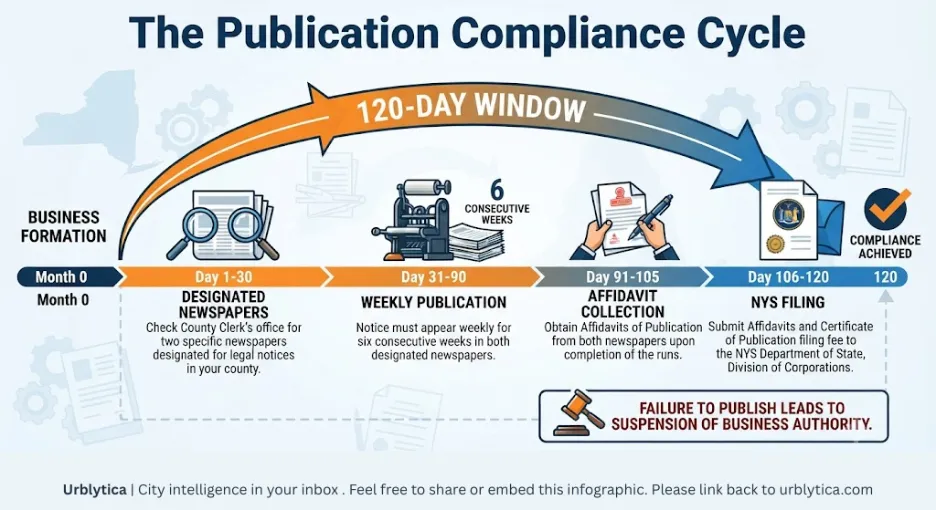
New York statecontainsa unique requirement for LLCs known as the publication requirement. Within120 daysof the effective date of your Articles of Organization, you must publish a copy of your articles or a notice related to the formation of your LLC in two newspapersdesignatedby the county clerk.
This process is a mandatory step formaintainingyour business in good standing. Failure to comply can lead to a suspension of your ability tomaintaina lawsuit in the state courts. Given the complexity, many founders seek guidance from professionals who understand the nuances of state corporate compliance solutions. This requirement is often misunderstood, yet itremainsa critical hurdle that must be cleared to complete your legal setup.
Managing Financial Compliance
Financial discipline is the engine of any successful LLC. You must separate your personal financial life from your business operations. This involves opening a dedicated business bank account and securing an Employer Identification Number (EIN) from the IRS.
Founders often find it helpful to calculate compound interest when modeling their capital investments orlongtermfinancial growth. Whether your operations are in Buffalo or another major center, keeping separate ledgers is vital. For deepercitylevelinsights, visit Urblytica’s City Intelligence Dashboard . Your ability to track your recurring expenses is also essential. Using a subscription analyzer and burn rate tool can help you keep your overhead under control as you scale.
Comparison of Business Structures
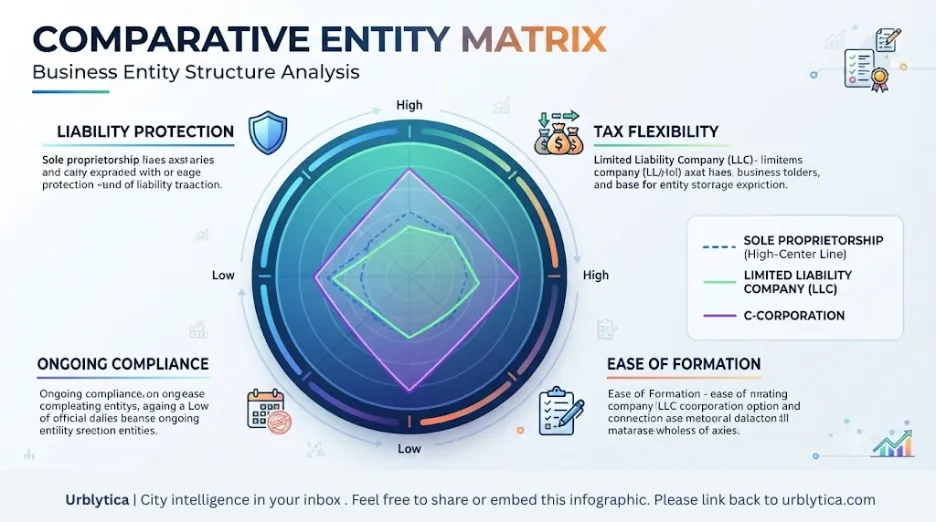
Choosing between an LLC and other entities involves weighing administrative costs and liability protection. The table below provides a breakdown of common entity considerations in the New York market.
|
Entity Type |
Formation Cost |
Liability Protection |
Administrative Complexity |
|
Sole Proprietorship |
Very Low |
None |
Low |
|
General Partnership |
Low |
None |
Low |
|
Limited Liability Company |
Moderate |
High |
Moderate |
|
C-Corporation |
High |
High |
High |
|
S-Corporation |
High |
High |
High |
The Role of an Operating Agreement
While New York law does not require you to file your Operating Agreement with the state, it is an essential internal document. This agreement outlines the management structure, the roles of members, and the procedures for profit distribution. It acts as the constitution of your LLC.
For thoseoperatingin amulti membercontext, the Operating Agreement acts as a roadmap for conflict resolution. It provides clarity that protects members during periods of disagreement. If you are planning an acquisition or looking to buy an established franchise, your Operating Agreement will be a primary document reviewed by your potential partners or lenders. This document is the ultimate tool for proving that your business is a separate legal entity from yourself.
Estimated Costs of LLC Maintenance
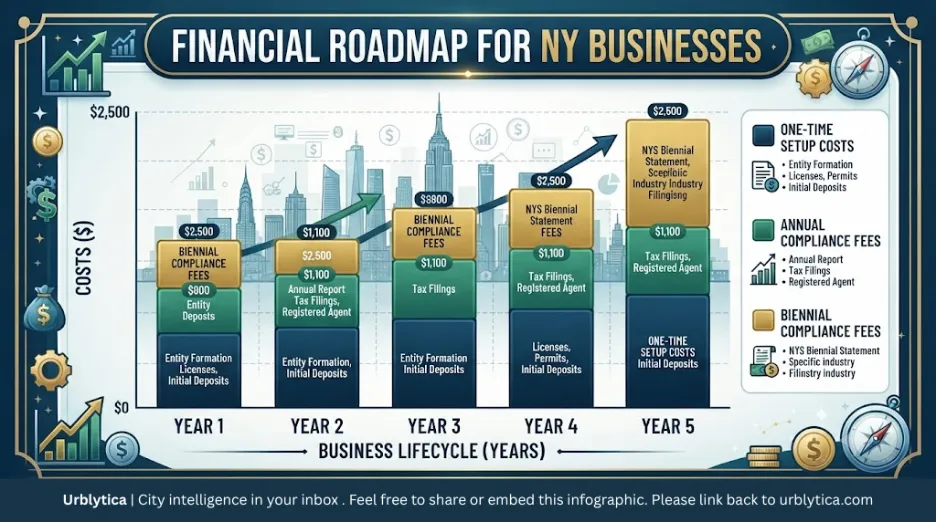
Financial preparation allows you to navigate the growth phase without unexpected hurdles. Use the table below to estimate yourinitialand recurring expenses.
|
Expense Item |
Frequency |
Estimated Cost |
Purpose |
|
Filing Articles of Organization |
One-time |
200 USD |
State registration |
|
Biennial Statement Filing |
Biennial |
9 USD |
Compliance update |
|
Publication Fee |
One-time |
50 - 1500 USD |
Statutory requirement |
|
EIN Registration |
One-time |
0 USD |
Federal tax ID |
|
Registered Agent Service |
Annual |
100 - 300 USD |
Legal notification |
Operational Management and Growth Metrics
Efficiency is the difference between a struggling entity and a market leader. As your LLC matures, you may need to track your daily output tomaintainyour profit margins. If you are struggling with time allocation, you might benefit from a time blocker day planner to manage your compliance deadlines.
Tracking these metrics is especially important when you are scaling across multiple districts. If you have operations spanning across Yonkers or other regions, your data must be centralized. For deepercitylevelinsights, visit Urblytica’s City Intelligence Dashboard .
LongTermSustainability and Compliance
As an LLC, your responsibility includes fulfilling ongoing state obligations. This includes the filing of a Biennial Statement, which updates the state on your current business address and contact information. Staying proactive with these requirements prevents administrative headaches that could otherwise derail your focus on your core business services.
If you are at a stage where you need tooptimizeyour workday calendar to manage your compliance deadlines, ensure you areutilizingthe right tools. Yourlongtermsuccess is a byproduct of consistent, small actions that compound over time. Remember that your entity is a livingdocument;as your business evolves, so should your internal policies and operational strategies.
Strategic Acquisition Considerations
For established entrepreneurs, sometimes the fastest path to growth is not building from scratch butacquiringan existing asset. When you evaluate businesses for sale , you must consider the legal structure of the target entity. You may need to evaluate a business for sale based on its existing compliance history in New York.
Ensuring that the company you areacquiringhas met all state publication and biennial filing requirements is a standard part of due diligence.Failing to accountfor these liabilities can lead to unexpectedcosts ofpostacquisition.Always perform a thorough audit of the target entity before signing any agreements.
Specialized Sector Compliance
Depending on your industry, you may faceadditionalregulatory hurdles. Healthcare and senior care services, for example, have high barriers to entry and require specific licenses. If you areoperatingin the health sector, you may need to look for resources to manage assisted living support coordination .
Even in less regulated industries, having a professional network is key. Whether you are in advertising or professional services , your ability toleveragelocal resources and professional tools will dictate your speed of growth. Keep your operational documents organized and your compliance records updated to ensure you are ready for any potential audits or inspections.
Technology and Data Security
In the modern digital landscape, your business data is your mostasset. Protecting it is not just a security measure; it is a fiduciary duty. Ensure that your client lists, financial records, and operational databases are sanitized and secure. You can use tools to clean enterprise data payloads tomaintainthe integrity of your information.
Do not ignore the importance of data privacy laws. As you grow, you willlikely handlemore sensitive client information. Being compliant with data privacy regulations is as important as being compliant with your LLC formation requirements.
Frequently Asked Questions
1.Is New York a good state to form an LLC?
Yes, New York is a highly stable business environment with strong legal structures thatbenefitowners.
2.What is the publication requirement for a New York LLC?
You must publish a notice of your LLC formation in two designated newspapers in the county where your office islocatedwithin120 days.
3.Do I need an Operating Agreement?
Although not filed with the state, an Operating Agreement is vital for internal governance and protecting your limited liability status.
4.Can I form an LLC in New York if I do not live there?
Yes, you can form an LLC in New York as a foreign entity or domestic entity, provided you have a registered agent in the state.
5.How much does it cost to start an LLC in New York?
Theinitialstate filing fee for the Articles of Organization is 200 USD, plus associated publication costs which vary by county.
6.What is the Biennial Statement?
This is a report filed every two years with the Department of State to confirm your business address and contact information.
7.How long does the formation process take?
Processing times vary based on the method of filing and the current volume at the Department of State, but electronic filing is significantly faster.
8.Does an LLC protect me from personal liability?
Yes, an LLC provides a legal veil thatgenerally protectsyour personal assets from the business liabilities incurred by the company.
9.Can I change my LLC name later?
Yes, you can file an amendment to your Articles of Organization with the Department of State to change your company name.
10.What happens if Ifail tofile the publication notice?
Failure tocomply withthe publication requirement can result in the suspension of your ability to sue in New York courts, though it does not invalidate your LLC existence.
 Perplexity
 Claude
 Grok
Grok